


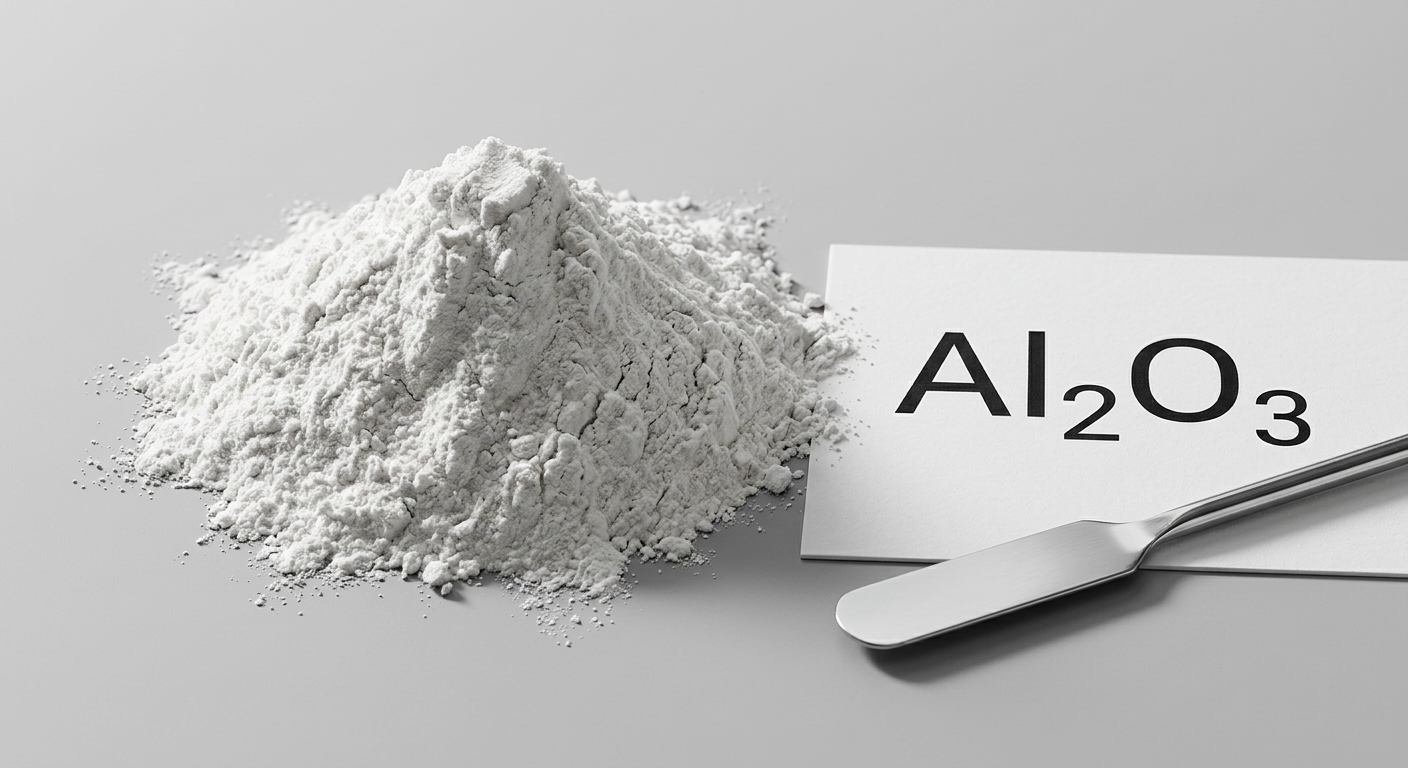

Reactive alumina is a modern high-quality material presented as a finely dispersed corundum powder with particle sizes starting from the submicron range (up to 4 microns). It is ready for use in this form.
The material is chemically inert: it is insoluble in acids, exhibits semiconductor properties, and decomposes only in an alkali melt. Reactive alumina is classified as a low-hazard substance (hazard class 4) and is fire- and explosion-proof.
It is a finely dispersed aluminum oxide (Al₂O₃) powder with particle sizes up to 4 microns, produced using a special technology. Its key feature is high reactivity, which allows for lower sintering temperatures and the formation of a dense refractory structure.
It reduces the amount of mixing water without sacrificing flowability, enables denser particle packing, and thereby increases strength, abrasion resistance, and resistance to aggressive media. It also lowers the firing temperature, saving energy.
Yes, it belongs to hazard class 4 (low-hazard substances), is non-flammable and non-explosive. Standard respiratory protection is recommended when handling the powder.
It is used in the production of engineering ceramics, where the powder addition improves quality and broadens technological possibilities, as well as in other areas requiring high-purity corundum with controlled particle size distribution.