EnglishPolish

White cement

Description

White cement is a powdered binder that combines high strength with excellent aesthetic and decorative properties. Its key difference from ordinary grey cement lies in the use of a special low-iron clinker, practically free of iron and manganese oxides that cause the grey color. The material is environmentally safe due to pure natural raw materials (chalk, kaolin) and complies with the EN 197-1 standard.

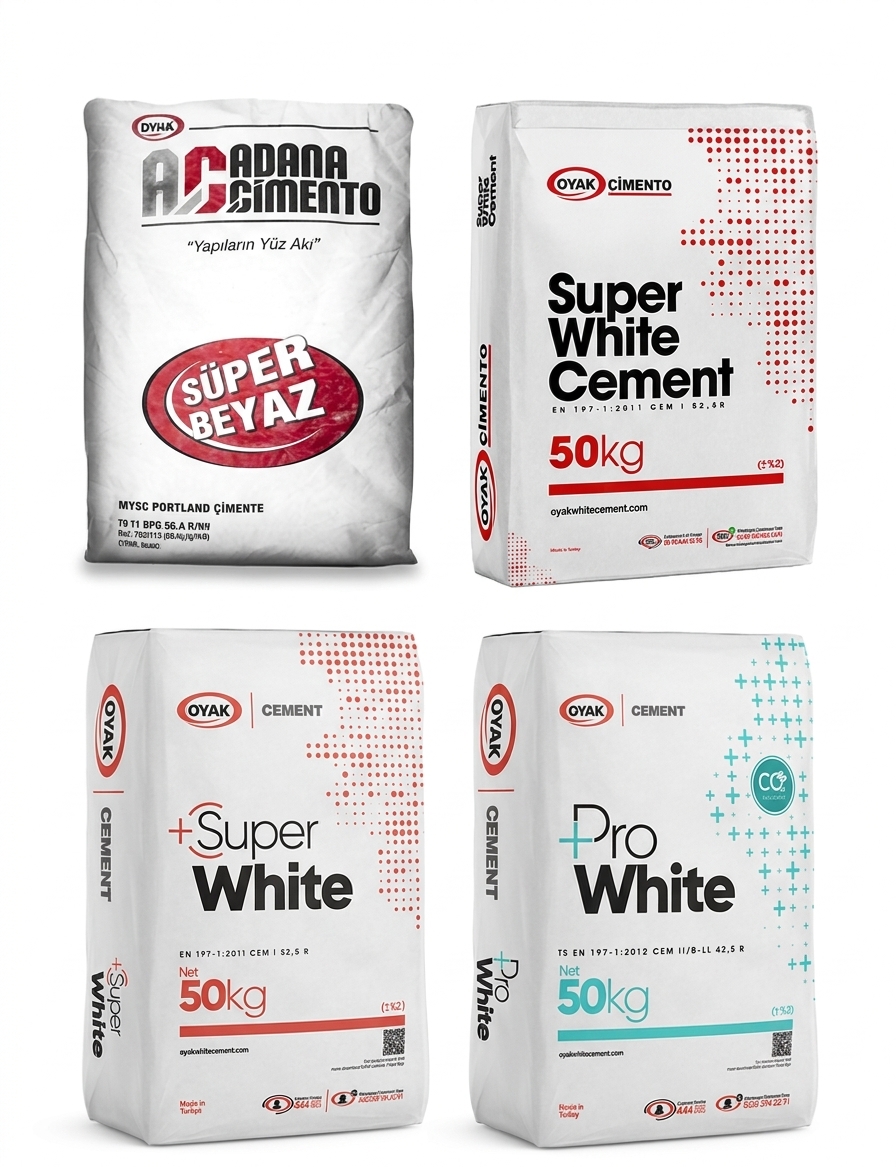
The product is available in two types:

  • White cement (CEM I) — produced by intergrinding low-iron clinker and gypsum stone.
  • Portland-limestone cement (CEM II/A-LL or CEM II/B-LL per EN 197-1) — additionally contains pure limestone in various proportions, allowing different shades and adjusted working characteristics.

Both types comply with the global quality standard EN 197-1.

Advantages

  • Aesthetics and decorativeness — the white color enables creation of architecturally expressive structures without additional painting or plastering, reducing the amount of finishing work.
  • High strength — ensures reliability and durability of construction and finishing works, comparable to grey cement in load-bearing capacity.
  • Eco-friendliness — manufactured from pure natural raw materials (chalk, kaolin), contains no harmful impurities and is environmentally safe.
  • Reduced work time — the light color of the finished surface minimizes or completely eliminates final finishing, accelerating the construction cycle.
  • Versatility — suitable for masonry, pouring, restoration, and creation of decorative concrete elements.

Applications

  • Laying ceramic and paving tiles, curbstones.
  • Working with marble, granite, laying industrial floors.
  • Insulation works and treatment of construction joints.
  • Construction of buildings and structures where an aesthetic appearance is important without additional finishing.
  • Making concrete sculptures, monuments, mosaics, and bas-reliefs.
  • Restoration works.

FAQ

Ordinary white cement (CEM I) consists only of low-iron clinker and gypsum. Limestone cement (CEM II/A-LL or B-LL) additionally contains finely ground limestone, which changes the shade and some properties. Both types comply with EN 197-1.

Yes, it is suitable for exterior applications. However, to preserve decorative whiteness and protect against rain streaks and efflorescence, it is recommended to treat the surface with water repellents or final protective compounds.

Generally no — that is its advantage. For interior works, the surface is often left without additional finishing. For exterior use, final painting is not required, but protective treatment will extend service life and maintain the appearance.

Yes, it is produced from high-purity natural raw materials (chalk, kaolin) and contains no toxic additives. The EN 197-1 standard guarantees stable composition and technical performance.