


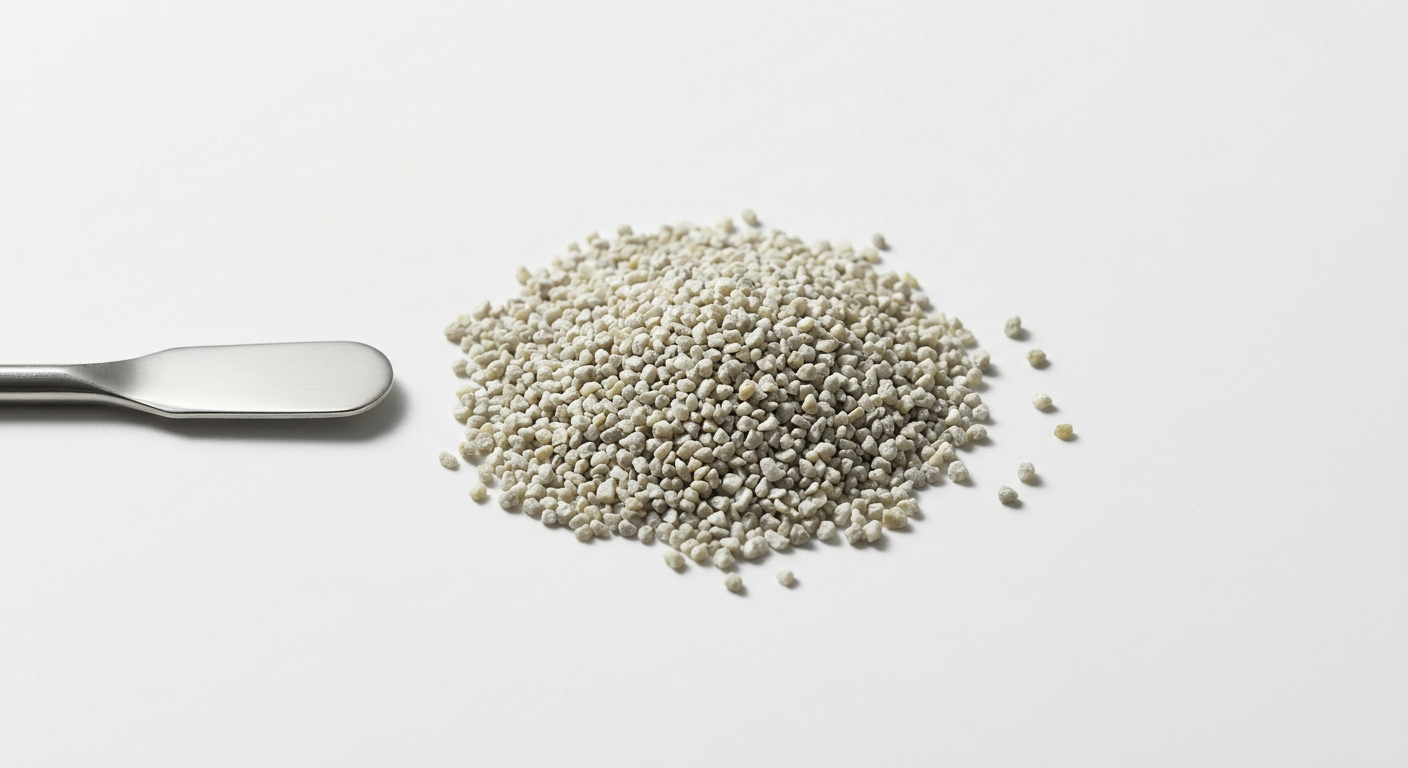

Spinel is a type of refractory material whose main component consists of compounds containing oxides of divalent and trivalent metals. Spinels are a group of compounds whose composition can be expressed by the general formula R²⁺R³⁺₂O₄. As a rule, they crystallize in the cubic system. R²⁺ can be Mg, Fe, Zn, Mn, and less commonly Co and Ni, while R³⁺ can be Fe, Al, Cr, Mn.
Spinel products are obtained from a mixture of sintered magnesite and technical alumina. They are produced either pressed with subsequent firing or cast. Pressed products are manufactured from a mixture containing about 30% magnesite, pre-fired at 550–650 °C, and 70% technical alumina; magnesite serves as the binder. To accelerate the synthesis reaction, 0.5–1.0% boric anhydride B₂O₃ or chromite is added to the mixture.
Cast products are obtained from a melt prepared in electric furnaces. They have very high density and extremely high slag resistance up to 1600 °C. At temperatures above 1600 °C, spinel products are rapidly destroyed by ferruginous slags. Their maximum service temperature is 1600–1700 °C, and thermal shock resistance is 3–5 water-heat cycles.
Spinel is a refractory material based on compounds of oxides of di- and trivalent metals (spinels). The raw materials are sintered magnesite and technical alumina. Products are obtained by pressing with firing or by casting from a melt.
Pressed products are formed from a powder mixture and fired. Cast products are obtained by melting raw materials in electric furnaces and pouring into molds; they are characterized by very high density and maximum slag resistance up to 1600 °C, but are destroyed by ferruginous slags above this temperature.
The maximum service temperature is 1600–1700 °C. At temperatures above 1600 °C, cast spinel products are rapidly destroyed by ferruginous slags. Thermal shock resistance is at the level of 3–5 water-heat cycles.
High purity makes it possible to obtain refractories without extraneous impurities, which is critically important in metallurgy: it prevents the introduction of non-metallic inclusions into steel and increases the reliability of the lining.