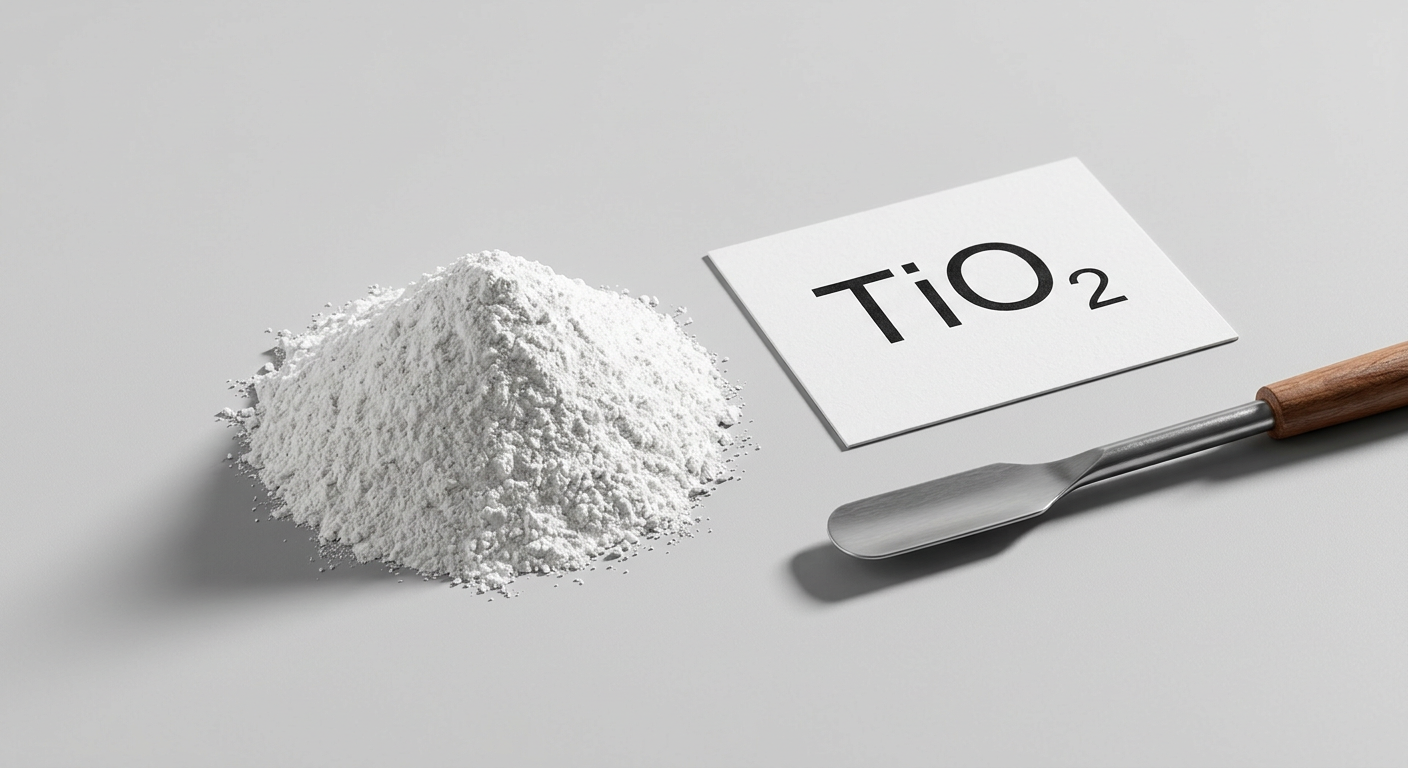
Titanium dioxide (TiO₂) is a white crystalline or powdery substance without taste or smell. It is the most important white pigment for paints and coatings, plastics, paper, rubber, glass, and other industries. Titanium dioxide gives coatings maximum whiteness, increases hiding power, and enhances resistance to UV radiation and weathering. Coatings containing TiO₂ do not yellow over time and retain their original color for decades while remaining non-toxic and safe.
Advantages
High bleaching ability – delivers a bright white color even at low concentrations.
Excellent compatibility with any film former – easily disperses in water-based, alkyd, acrylic, and other systems.
High hiding power – cost-effective coverage thanks to the ability to hide the substrate color with a thin layer.
High weather and moisture resistance – coatings are resistant to fading, chalking, and degradation caused by sun and moisture.
Non-toxicity and chemical inertness – safe for humans and the environment; does not react with most chemicals.
UV resistance – protects the polymer binder in paint or plastic from photodegradation, extending the service life of the product.
Technical Specifications
Specific numerical parameters (TiO₂ content, whiteness, hiding power, fineness, density) depend on the grade of titanium dioxide (rutile or anatase form, surface treatment) and are provided on request.
Basic information applicable to all types:
Appearance: white powder or crystalline substance.
Note: for selecting the optimal grade for a specific technology, please contact our specialists.
Applications
Paints and coatings: titanium white, water-based and alkyd paints, enamels, varnishes, primers, fillers, decorative plasters.
Plastics manufacturing: provides whiteness, hiding power, and UV stability to products made of PVC, polyethylene, polypropylene, and other polymers.
Laminated paper: in the production of decorative high-pressure laminates (HPL, CPL) for furniture and interiors.
Rubber products: as a pigment and filler in the tire and rubber-technical industry.
Glass industry: a component for melting heat-resistant and optical glass, imparting transparency and refractoriness.
Refractories: coating of welding electrodes, mold coatings, and other heat-resistant materials.
Other industries: cosmetics, pharmaceuticals (excipient in tablets and creams), food industry (colorant E171 in restricted applications).
FAQ
Yes, in bonded form (in paints, plastics) it is completely inert and non-toxic. Inhalation of dust during packaging requires standard protective measures (respirator), but the material itself is not classified as a carcinogen in products.
Both are forms of titanium dioxide, but rutile has a denser crystal lattice, making it more resistant to UV radiation and weather conditions. Anatase is softer and sometimes provides slightly higher whiteness. For exterior applications, rutile is always recommended.
In a dry, covered area, in the original packaging, protected from moisture. The shelf life is virtually unlimited under proper conditions.
In some countries, TiO₂ (E171) is authorized as a food colorant; however, its use has been increasingly restricted in recent years. For food-grade applications, a special grade with appropriate certifications is required.