


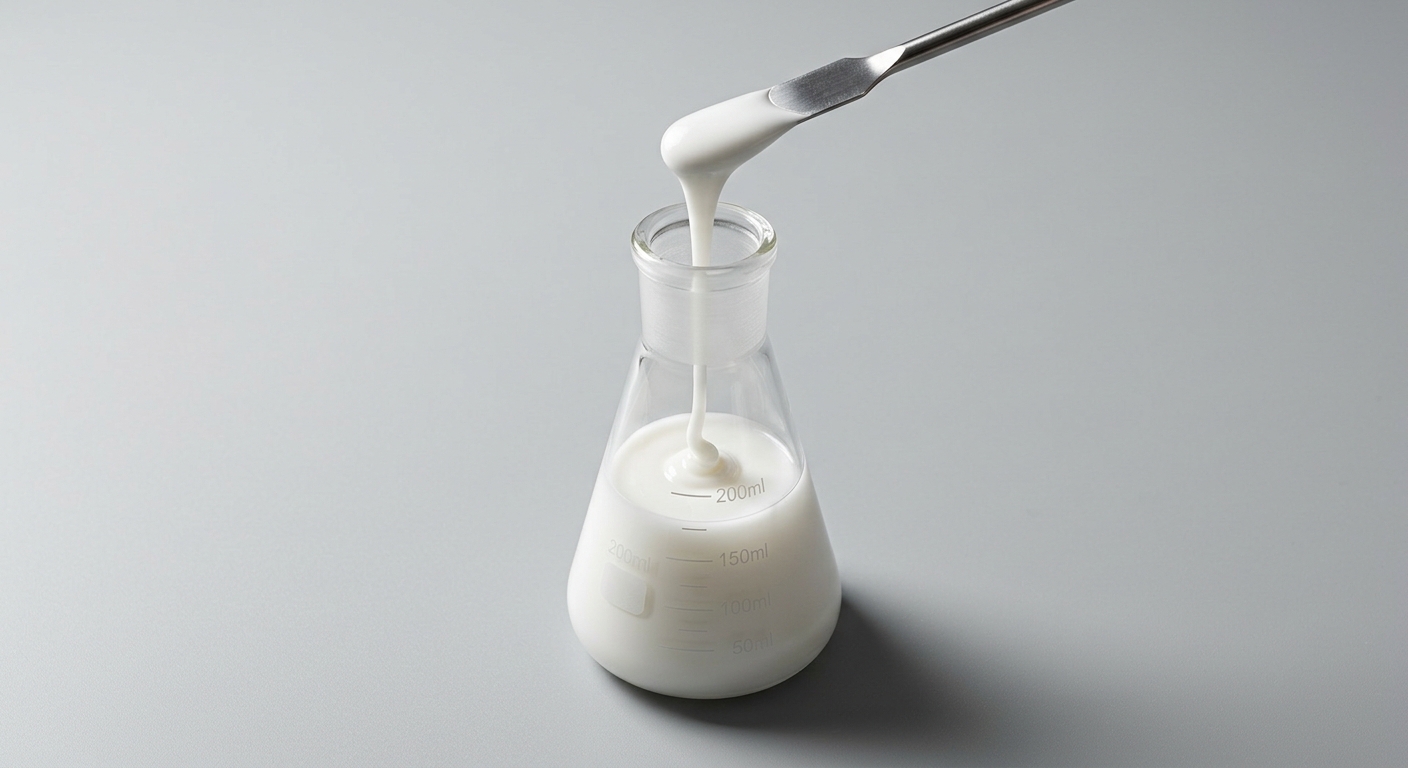

A defoamer is a substance that prevents or reduces the formation of foam caused by the ingress and distribution of air during the production and use of paints and varnishes. Foam formation can also be influenced by other constituent raw materials of the paint: dispersants (surfactants), thickeners (cellulose ethers), dry fillers and pigments. This can lead to deviations in production technology and coating defects.
When introduced into the system, defoamers penetrate the foam layer and expand the surfactant layer, forming a less elastic film. After that, the system mass acquires a uniform appearance.
In water-disperse systems, mineral oil defoamers and silicone defoamers are used.
Mineral oil defoamers consist of a carrier oil, hydrophobic particles and emulsifiers. They are designed for matt and semi-gloss emulsion paints and plasters.
Silicone defoamers consist of dimethyl polysiloxanes modified with polyethers. Unlike oil-based defoamers, they do not reduce the gloss of the coating and have high defoaming properties.
For complete technical data, details of their performance, and pricing, you can contact our company Alventus.
Mineral oil defoamers consist of a carrier oil, hydrophobic particles and emulsifiers; they are effective in matt and semi-gloss paints and plasters. Silicone defoamers (dimethyl polysiloxanes modified with polyethers) do not reduce coating gloss and have higher defoaming capacity, so they are used in gloss and high-performance systems.
It penetrates the foam layer and expands the surfactant film, making it less elastic. As a result, the bubbles burst and the mass becomes homogeneous.
No, the choice depends on the required gloss of the coating and the system composition. For matt and semi-gloss paints, mineral oil defoamers are suitable; for gloss paints, silicones are preferred so as not to reduce gloss.
When properly selected and dosed, the defoamer acts only on foam, without impairing adhesion, color, or mechanical properties of the coating.