


The production of building gypsum is a complex technology with many nuances. It is a valuable building material that enables the production of building mixes, finishing materials, and decorative elements. Building gypsum is produced through a series of technological stages. This guarantees a high-quality product.
Gypsum stone serves as the foundation of production. This natural mineral contains 2 water molecules, which are important during calcination and the subsequent use of the material. The deposit affects the purity, which determines the final product.
Gypsum stone is extracted by quarrying or underground mining. It is crushed to facilitate processing. Cleaning from impurities is also performed.
The production of building gypsum is carried out after heat treatment of the raw material at 150–180 degrees. During this process, some of the crystallization water is released from the stone, allowing a hemihydrate material to be obtained.
Different temperature regimes are permitted. Therefore, each technology yields a unique building gypsum:
The production of the material is guaranteed when the correct reaction occurs between the components. As a result, high-quality gypsum is provided.
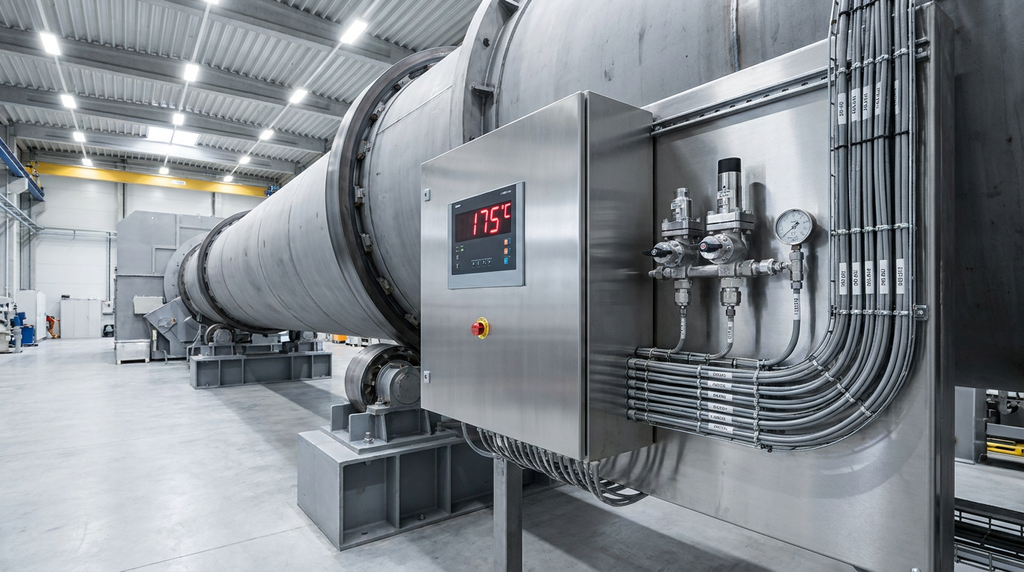
The production of the material is completed after passing through all stages. Once calcination is done, the material is ground.
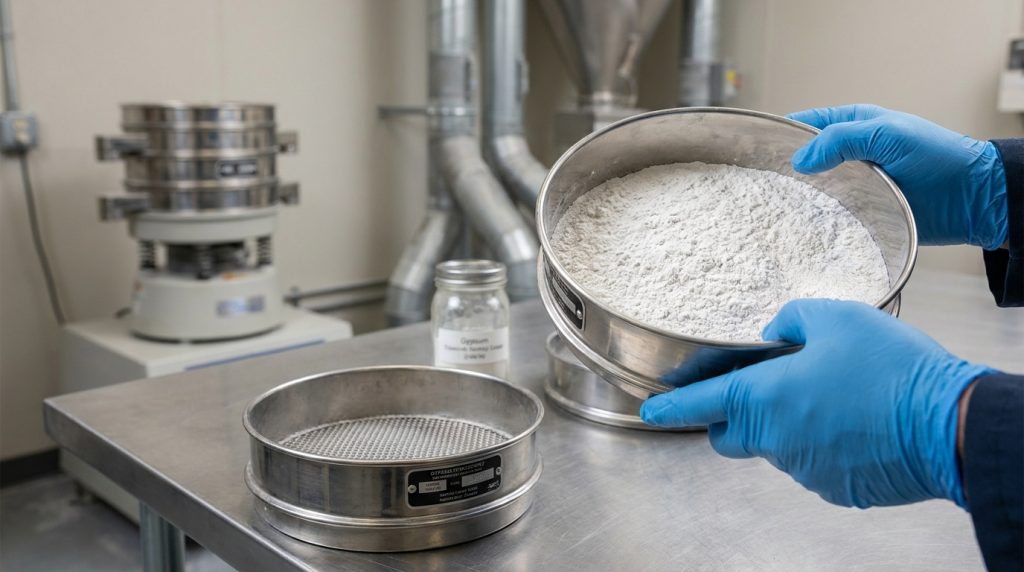
The resulting powder is passed through a sieve and divided into fractions. This makes it possible to obtain gypsum with various characteristics.
A reaction must occur between the powder and components that improve the properties of the material. The following additions are permitted:
All components are added in accordance with modern technological standards, guaranteeing a quality result.
The resulting gypsum must be packed in paper or polyethylene bags to prevent contact with moisture. It can be stored only in dry conditions because it hardens upon contact with water.
After the production process is complete, the result is inspected. Specialists also monitor quality during manufacturing. The chemical composition, fineness of grind, setting time, and strength are necessarily evaluated. If all characteristics meet the standard, the building material is released for sale.
This gypsum performs its tasks excellently. It should be mixed with water just before use, according to the instructions provided by the manufacturer. It is important to observe the proportions; otherwise, a quality result will not be achieved. The specified safety rules must also be followed.
The manufacture of building gypsum is a complex process involving extraction, calcination, grinding, and mixing with modifiers. High-quality material is essential in the construction industry because it is strong, workable, and easy to use. Due to the application of modern quality control methods, a practical building gypsum is produced.