


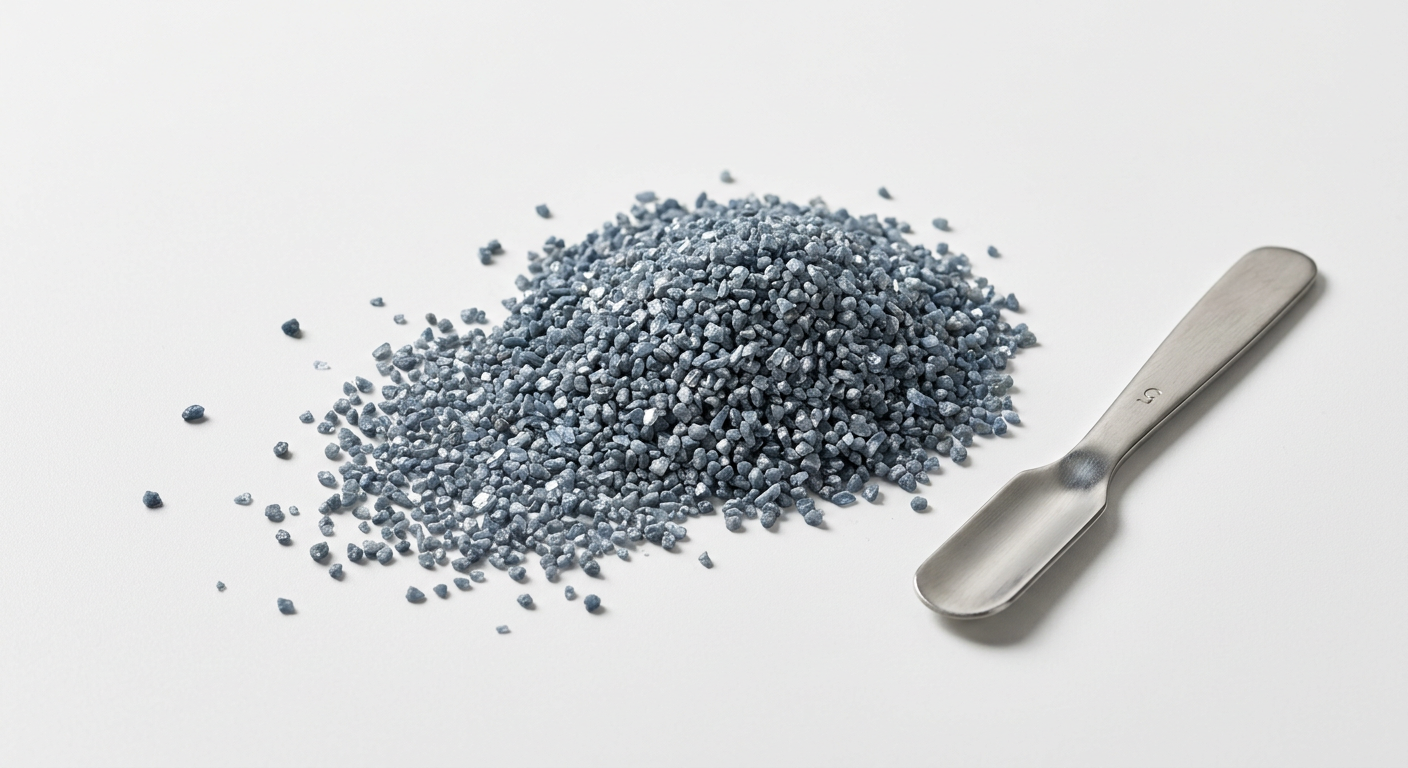

Kyanite is a mineral of metamorphic, alumina-rich rocks belonging to the sillimanite group. It is an efficient type of refractory and ceramic raw material. Its structure may include a small amount of ferric iron, as well as impurities of alkali oxides and occasionally oxides of Ca, Mg, Cr, and other elements.
Kyanite exhibits strongly pronounced hardness anisotropy. It does not dissolve in acids and is not radioactive. It forms elongated, flattened, often curved, prismatic to tabular crystals, as well as dense fibrous, radially radiant, and granular aggregates. It occasionally forms twins.
The key difference is its strongly pronounced hardness anisotropy and ability for irreversible thermal expansion. When heated, kyanite expands irreversibly, making it an effective shrinkage compensator and crack filler, unlike andalusite and sillimanite, whose expansion is minimal.
Yes, the mineral is non-radioactive and insoluble in acids, making it chemically inert and safe. Standard respiratory protection is recommended when handling powder.
The main consumers are the refractory and ceramics industry: production of fused cast and monolithic refractories, linings, furnace accessories, and mullite. Due to its expansion properties, it is indispensable in precision casting and for crack filling.