


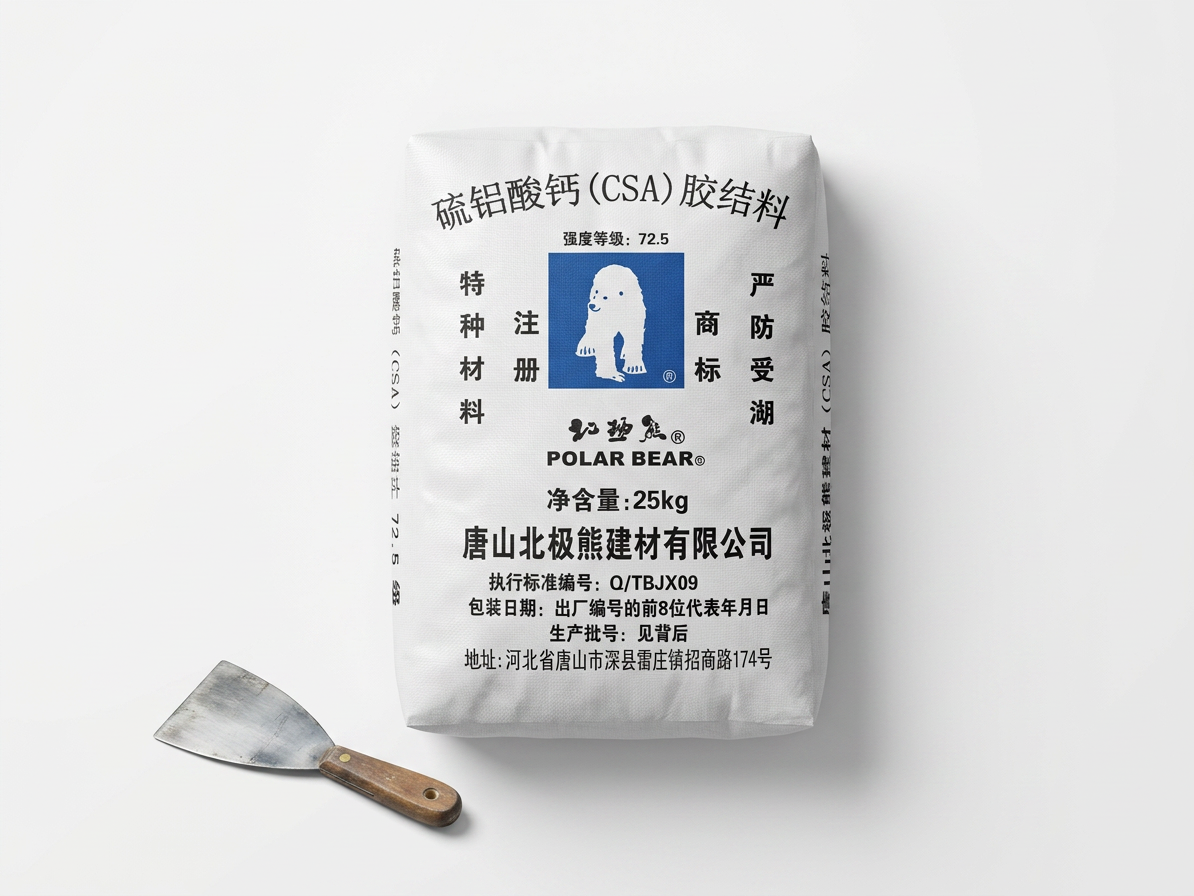

Sulfoaluminate cement (CSA) differs from general construction cements in its chemical and mineralogical composition and possesses unique construction and technical properties. The main features of the product are ultra-rapid early strength gain and short setting times.
The cement is used in combination with ordinary Portland cement, forming quick-setting industrial concretes and mortars. The material demonstrates high expansion, tensile strength, water impermeability, frost resistance, and corrosion resistance.
CSA sulfoaluminate cement is supplied in 25 kg bags.
CSA cement has a fundamentally different chemical and mineralogical composition, enabling it to set many times faster, achieve design strength in hours rather than days, and exhibit significantly less shrinkage. It also outperforms Portland cement in resistance to sea water and freeze-thaw cycling.
Yes, but it is most often used in combination with ordinary Portland cement to produce quick-setting industrial concretes and mortars with specified expansion and strength characteristics.
Extremely: after 300 freeze-thaw cycles, the loss of strength is negligible. This makes it an ideal choice for outdoor structures in harsh climates and for winter concreting.
Yes, its water impermeability is 2–3 times higher than that of Portland cement of the same class, and its corrosion resistance in sea water is significantly better than that of sulfate-resistant Portland cement.